You had a vision of a nursery. Soft walls, a beautiful crib, a cozy glider in the corner. Then life had other plans, and suddenly you’re staring at a baby room that barely fits a crib…
I know that feeling personally. When I went through my divorce, I moved into a smaller house with my two kids. Emily was just six months old, and my son Liam was older – there was no way I was putting a baby in a toddler’s room and surviving the chaos.
So I did what any determined mom would do: I looked at a tiny closet-sized room, took a deep breath, and said this is her nursery.
And honestly? It turned out to be one of my favorite spaces I’ve ever created.
These small nursery ideas are the exact strategies I used, and that thousands of moms in compact homes, city apartments, and cozy cottages swear by.
A small nursery room doesn’t mean a sad nursery. With the right layout, smart furniture, and creative storage, your tiny space can feel intentional, beautiful, and perfectly suited to a new baby.
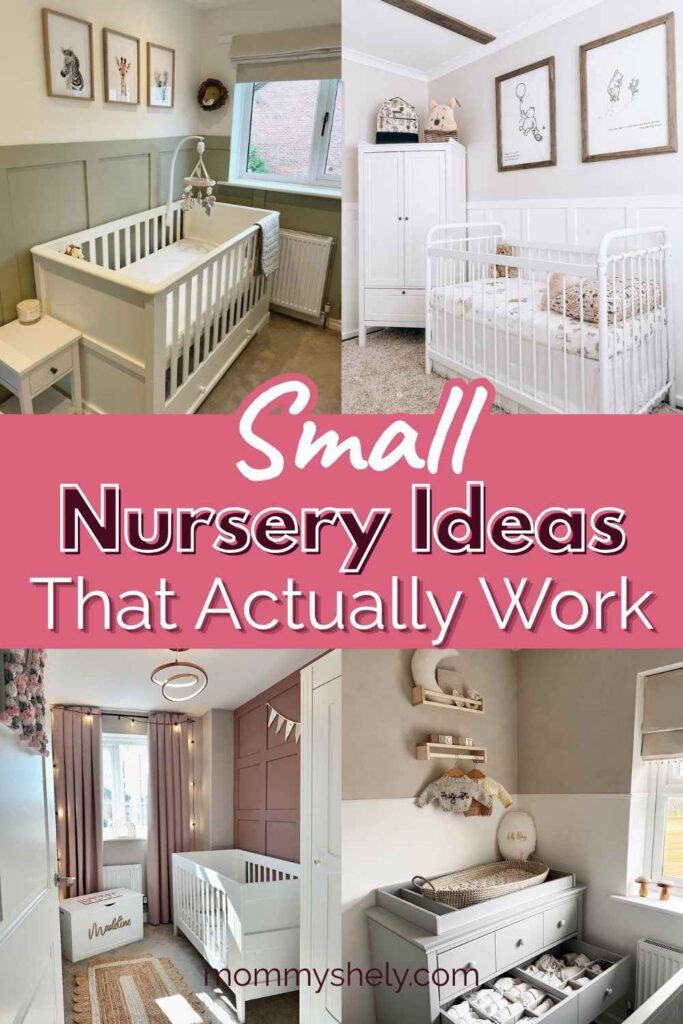
Pin For Later!
As an Amazon Associate I earn from qualifying purchases. This post may contain affiliate links.
Why a Small Nursery Is Actually a Good Thing
Before we dive into the ideas, let’s reframe this. Living in a city or a compact home means every inch matters, but that’s not a disadvantage. It’s a design challenge with real benefits.
With everything within arm’s reach during those late-night diaper changes, life gets simpler. No more crossing a vast room for a clean onesie at 3am.
When I set up Emily’s small nursery room, wipes, diapers, and a fresh onesie were all within arm’s reach from the crib. Game changer.
A smaller nursery also forces you to focus on what’s necessary. Fewer unused items means less mess and more time for baby snuggles. When every item has to earn its place, you end up with a calmer, more organized space.
Small Nursery Layout: How to Plan the Space Before You Buy a Thing
The biggest mistake parents make in a tiny nursery room is buying furniture first and figuring out placement later. Start with a layout plan instead.
Step 1: Measure everything. Note the room’s dimensions, door swing, window placement, and any awkward corners or sloped walls.
Step 2: Place the crib first. The crib is your anchor piece and takes the most floor space. Position it along the longest wall, away from windows and drafts. Everything else works around it.
Step 3: Map your traffic flow. You need a clear path from the door to the crib, especially for those disoriented 3am wake-ups. Don’t block it with a large rug or oversized furniture.
Step 4: Choose your changing station placement. Ideally, your changing spot should be within a few steps of the crib and near your storage. More on this below.
Step 5: Decide what stays out of the room. This was my secret weapon with Emily’s nursery. I stored most of her extra clothes, backup supplies, and toys in Liam’s room or in a hallway closet. The nursery held only what she needed on a daily basis. That single decision made the tiny room feel twice as big.
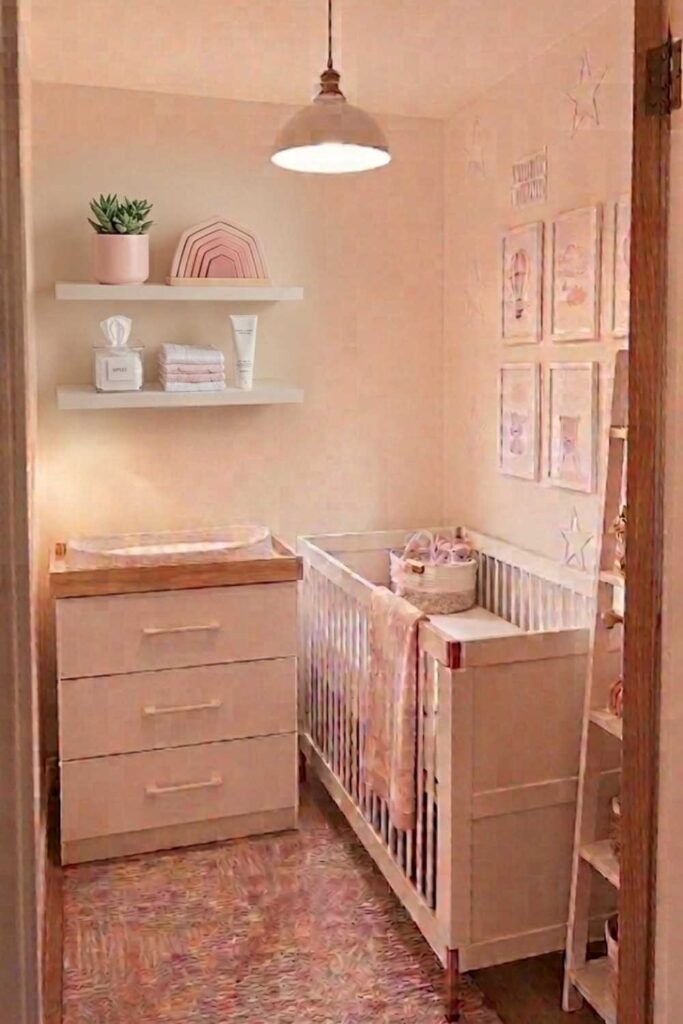
Smart Furniture That Works Twice as Hard
When space is limited, every piece of furniture needs to earn its place. Choose pieces that serve more than one purpose – this is the golden rule of small nursery design.
Mini Cribs for Small Spaces
Mini cribs are perfect for snug corners or rooms where a standard crib simply won’t fit. They provide all the comfort and safety of a full-size crib with a much smaller footprint, giving you valuable extra floor space to work with.
If you go with a standard-size crib, look for one with built-in drawers underneath. In Emily’s nursery, I used a slim storage containers tucked under the crib to hold extra swaddles and sleep sacks. It kept the floor clear and made that under-crib dead space genuinely useful.
The Dresser-as-Changing-Table Move
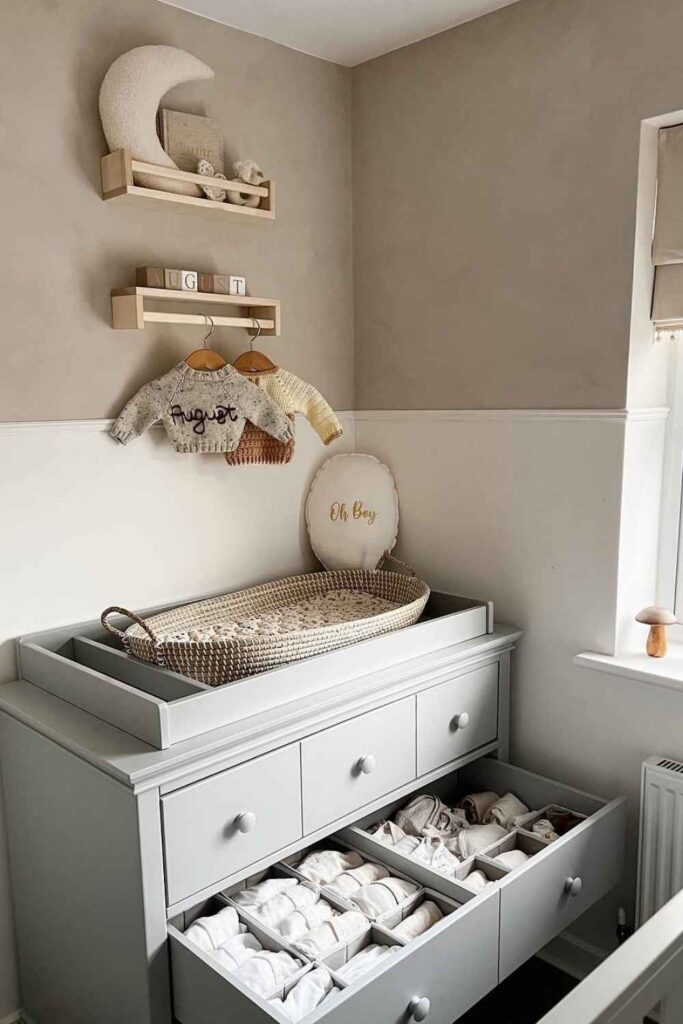
This is one of the best small nursery room ideas I used personally. Instead of buying a separate changing table (which takes up significant floor space and becomes useless in two years), I used a dresser with a changing topper on top.
In Emily’s nursery, that one piece gave me drawer storage for her daily clothes and a changing station. Her extra clothes and off-season items stayed in Liam’s room, which meant I only needed a small dresser, not a full wardrobe setup. One piece of furniture doing the job of two – that’s the small nursery mindset.
Wall-Mounted Changing Tables
If floor space is truly at a premium, wall-mounted changing tables fold flat against the wall when not in use. Pair yours with two or three floating shelves above it and you have a complete diaper station without using a single square foot of floor space.
Creative Storage Hacks for Tiny Nursery Rooms
A well-organized nursery makes a small space feel bigger and brighter. The key is to stop thinking horizontally and start thinking vertically.
1. Use the Walls
When Emily’s nursery was barely big enough to turn around in, the walls became my best friend. I installed floating shelves above the dresser-changing table combo to hold lotions, wipes, a baby monitor, and her little baskets of accessories. Everything I needed for a diaper change was right there – no hunting, no leaving the changing area.
Tall, slim bookcases tucked into corners work beautifully for books, small baskets, and baby essentials.
2. Pegboards Above the Changing Station
A pegboard mounted above your changing area is one of the most flexible storage solutions for a tiny nursery. Fill it with small bins, hooks, and baskets, and rearrange as your baby’s needs change.
In a small nursery room, what you need at 2 months looks very different from what you need at 8 months. The pegboard adapts with you.
3. Under-Crib Storage
If you haven’t bought a crib yet, look for one that comes with built-in drawers on the bottom – it’s one of the smartest investments for a small nursery. You get a safe sleep space and a storage solution in one piece of furniture, with no extra bins needed.
Already have a crib without drawers? No problem. Slide slim bins or under-bed containers underneath to store extra sheets, swaddles, or seasonal clothing. It’s a simple way to keep extras tucked away without taking up any additional floor space.
4. Over-the-Door Organizers
The back of the nursery door is prime, underused real estate. Hang a clear over-the-door organizer for swaddles, burp cloths, soft toys, or small accessories.
Everything stays visible and reachable without occupying a single inch of floor or wall space.
5. Near-Ceiling Floating Shelves
Install floating shelves up high, close to the ceiling, to draw the eye upward and free up lower wall areas for more accessible storage.
These are perfect for lightweight baskets filled with first aid supplies, extra lotions, or extras you don’t need every day.
Small Nursery Room Ideas by Style
A tiny nursery room doesn’t have to sacrifice style. Here’s how to make a small space feel beautiful and cohesive, whatever your aesthetic.
Small Boy Nursery Ideas
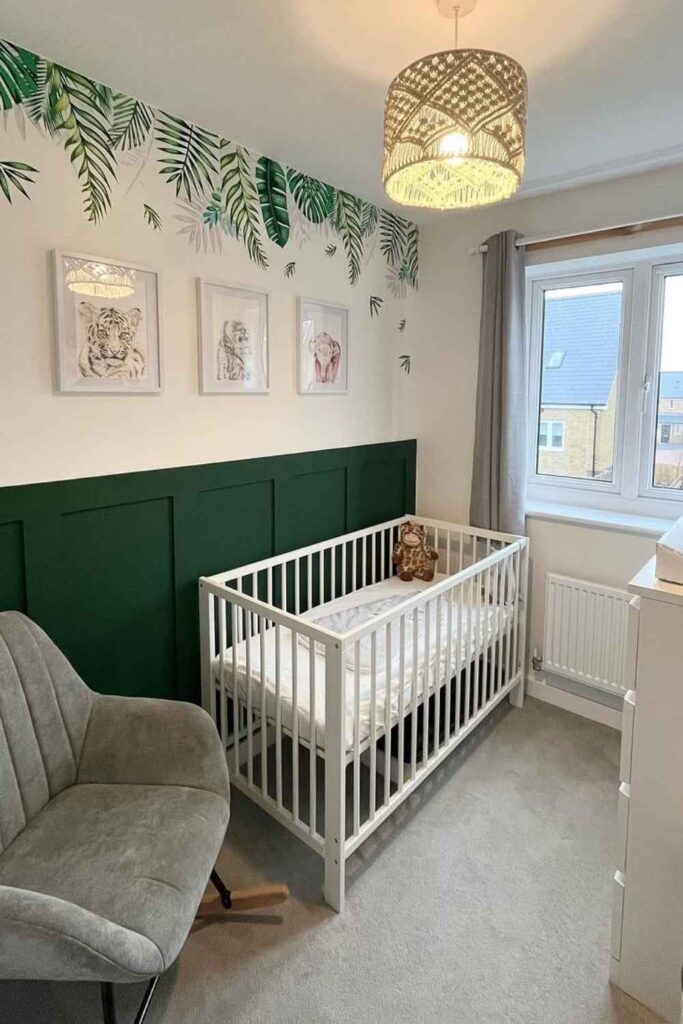
Bold doesn’t have to mean big. Deep accent walls, a few framed prints, and a white crib are all you need to create a compact nursery for your baby boy.
Dark earth tones work beautifully in small spaces because they add depth without requiring extra furniture or decor. Keep the rest of the room light and the floor as clear as possible, and even the tiniest nursery room will feel pulled together.
Ready to go deeper? Check out my post on Baby Boy Nursery Ideas
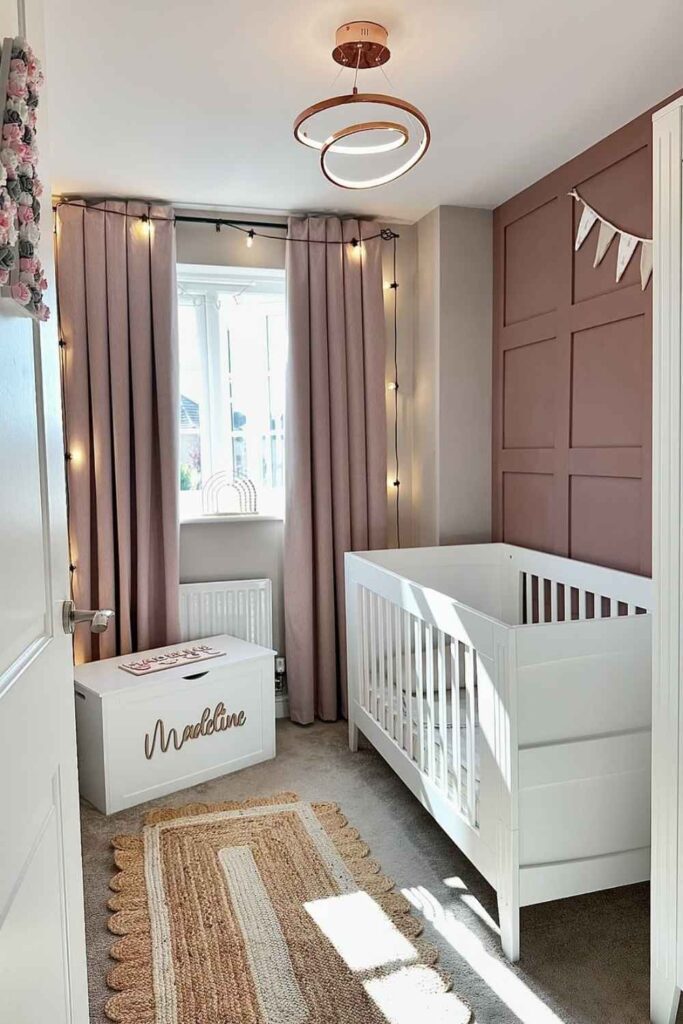
Small Baby Girl Nursery Ideas
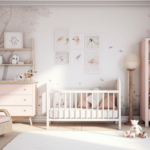
Soft, warm tones transform a small nursery from cramped to cozy and dreamy. Dusty pink, blush, or mauve on an accent wall paired with white furniture keeps the space feeling airy while still being beautifully feminine.
The key is to let one color do the work – keep everything else neutral so the palette feels calm, not busy. A simple rug and some soft lighting are all it takes to make the space feel magical.
For more girly nursery inspo, head over to my post on Baby Girl Nursery Ideas
Gender-Neutral Nursery Room Design
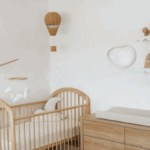
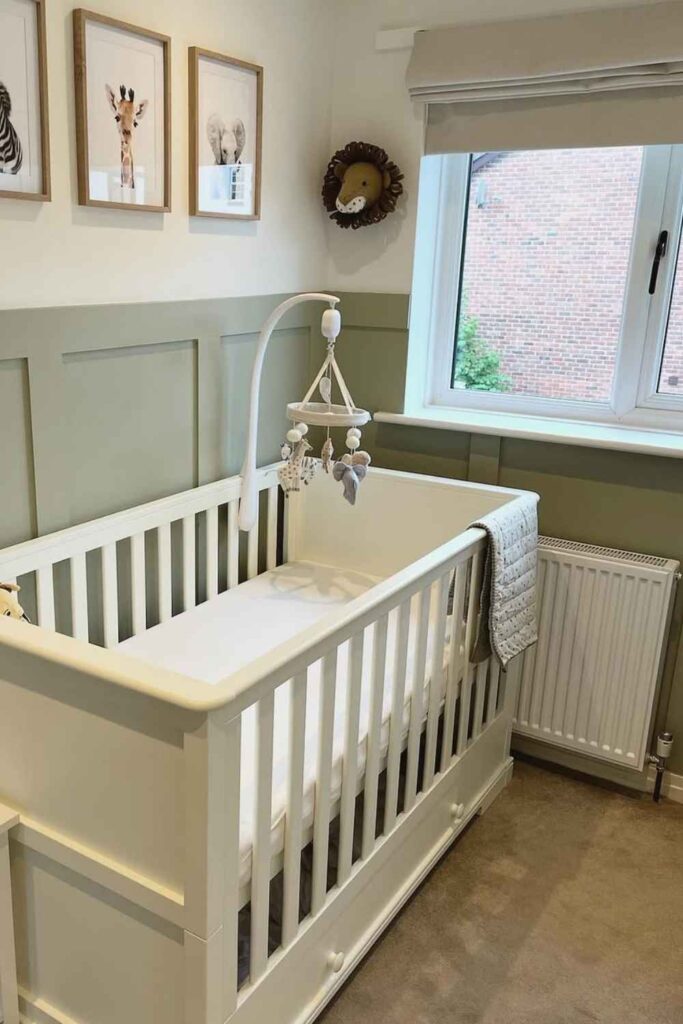
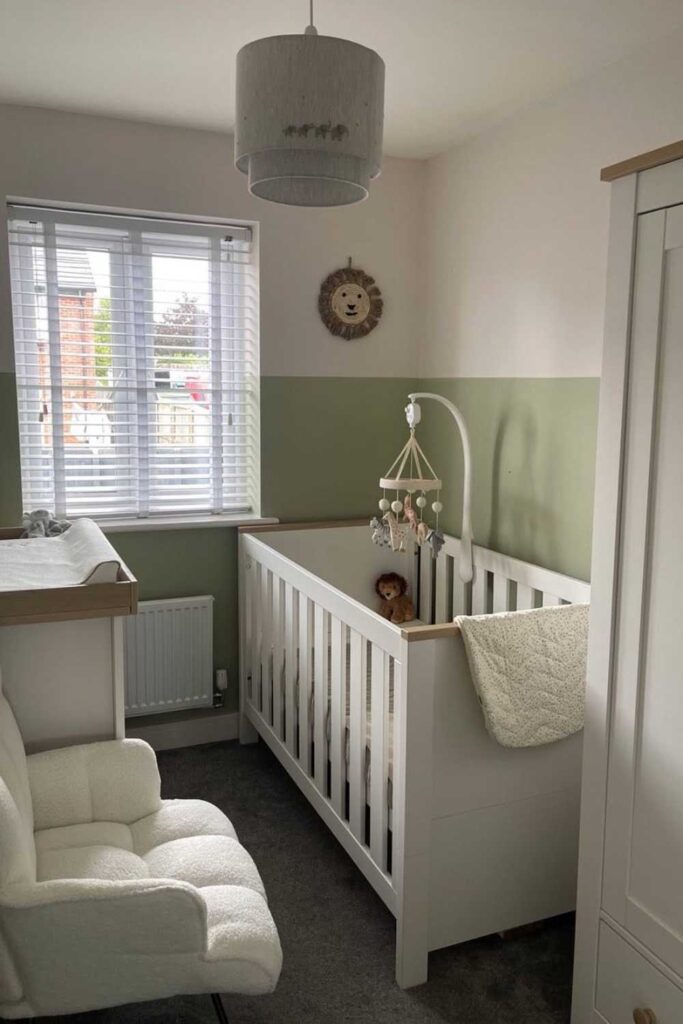
Soft greens, warm beiges, and natural wood tones are a dream combination for a small nursery room. They’re calming, timeless, and make the space feel open and fresh without leaning pink or blue.
A two-tone wall treatment – color on the lower half, white above – is one of the best tricks for making a tiny room feel taller.
Add simple, functional furniture and a couple of natural texture pieces and you have a nursery room design that works beautifully for any baby.
See all my gender-neutral nursery ideas here: Gender-Neutral Nursery Ideas
Character Nursery Ideas for Small Rooms
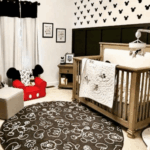
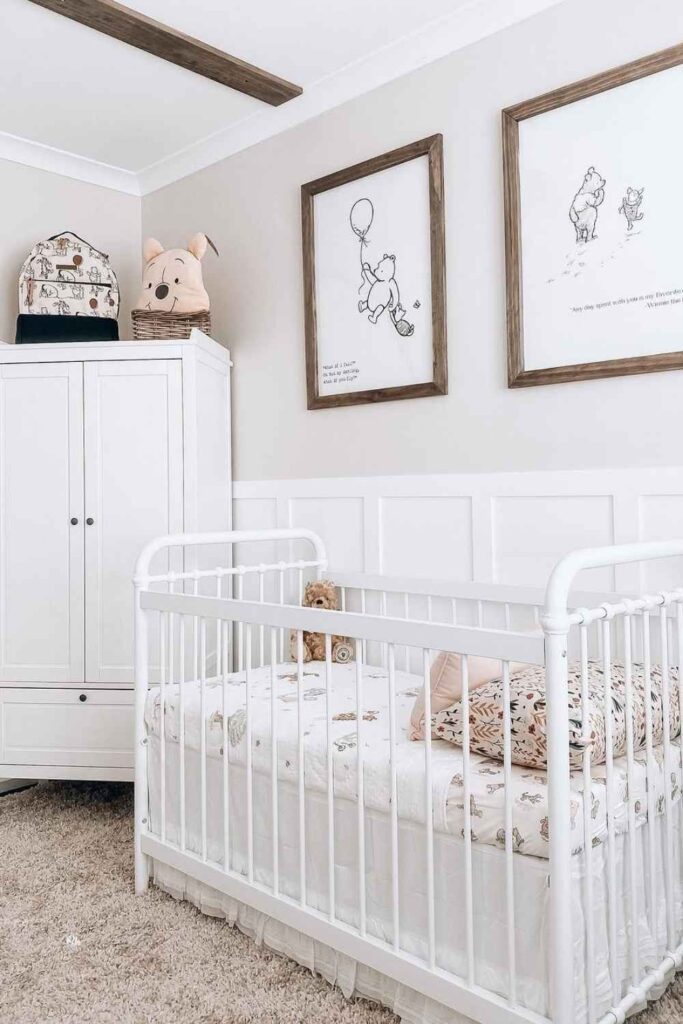
A character theme works perfectly in a small nursery – the secret is keeping the base simple and letting two or three themed pieces do all the talking.
Start with neutral walls, white furniture, and a soft rug, then bring in a couple of statement prints or a themed mobile. You get all the charm of a character nursery without overwhelming a compact space. Less really is more here.
Love the idea of a character nursery? Read my full post: Character and Theme Nursery Ideas
Color and Light Tricks That Make a Small Nursery Feel Bigger
The right colors and lighting can make a small nursery room feel significantly larger – no renovation required.
Light Colors Open the Space
Light, neutral paint – soft whites, pale grays, or dreamy pastels – reflects sunlight and creates an open, airy effect. This is especially important in a small nursery room where every visual trick counts.
If you love bold color, choose one accent wall. A single darker hue draws the eye and creates the illusion of depth and length, making the room feel bigger, not smaller.
Maximize Natural Light
Let in as much natural light as possible. Hang a mirror directly across from the window to bounce sunlight around every corner of the room. Use sheer curtains during the day for a bright, cheerful glow, and add a blackout shade for naps and nighttime.
Layering your window treatments – sheer for daytime, blackout for sleep – keeps the space versatile without adding visual clutter.
Setting Up a Nursery Corner in Your Parents’ Room
Not every baby gets their own room, and that’s completely fine. A nursery corner in a parents’ room, done thoughtfully, is cozy, practical, and works beautifully for the first several months.
What You Actually Need in the Corner
Keep it streamlined. A bassinet or mini crib, one small surface for overnight diaper changes (a dresser-changing table or a changing pad over the crib), and a small basket of overnight essentials. That’s it. Everything else lives in a closet or another room.
Dividing the Space Without Closing It Off
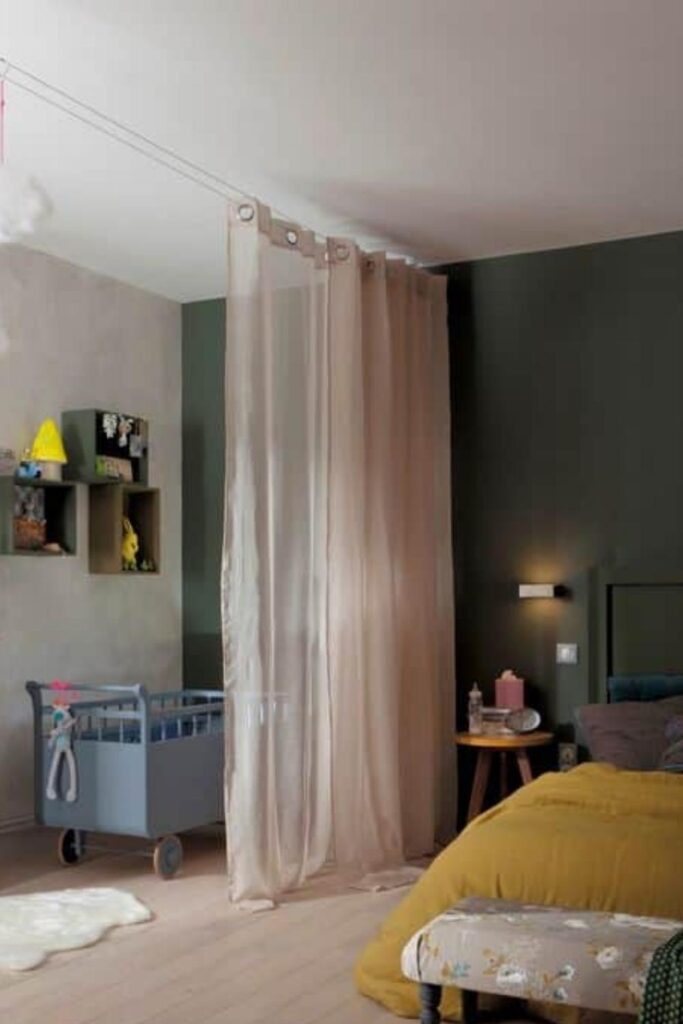
Lightweight room dividers or sheer curtains gently section off the nursery nook while keeping the room feeling open and airy. Avoid heavy curtains or tall dividers that block natural light or make the bedroom feel chopped up.
Soft, sheer curtains on a ceiling-mounted track are one of the most beautiful ways to create a nursery corner. They look intentional, maintain the room’s flow, and can be drawn back completely during the day.
Sliding Door Solutions
For rooms where you want a stronger separation, a sliding door uses zero floor space and can be matched to your bedroom decor for a seamless look. It tucks the nursery nook away completely when needed without the bulk of a traditional swinging door.
The key to a successful nursery corner is choosing fabrics and colors that flow with your existing bedroom decor. A cohesive palette makes the shared space feel calm and unified, not like two separate rooms awkwardly sharing square footage.
What NOT to Put in a Small Nursery
This is the section nobody writes, but every mom in a tiny nursery needs to read.
Oversized gliders. The classic nursery glider is beautiful, and enormous. In a small nursery room, swap it for a slim armchair or a small rocker that doesn’t dominate the floor plan.
Standalone bulky dressers. A tall, standard dresser takes significant floor space and usually provides more storage than a small nursery actually needs. A dresser-changing table combo (or a dresser with a changing topper) gives you more function in the same or smaller footprint.
Large rugs. A rug that’s too big visually cuts the floor space in half. In a small nursery, choose a small accent rug under the crib or near the feeding chair, not wall-to-wall coverage.
Too many decorative items. Small nurseries feel cluttered quickly. One or two meaningful pieces of decor – a framed print, a knit mobile, a small plant – is enough. Babies don’t need a fully styled room to feel safe and loved. A soft rug, a comfy chair, and your presence are all they truly need.
Everything in the nursery. This was my biggest insight with Emily’s room: her nursery didn’t need to hold everything. Toys, extra clothes, backup supplies – most of it lived in Liam’s room or in hallway storage. The nursery held only what was used daily, and that made all the difference.
Small Nursery Essentials: What You Actually Need
Use this as your checklist before buying anything for a small nursery room:
Must-haves:
- Safe sleep space: crib, mini crib, or bassinet (paid link)
- Changing station (wall-mounted, dresser topper, or above crib)
- One solid storage solution (shelves, pegboard, or bookcase)
- Soft lighting (a dimmable lamp or nightlight for feeds)
Nice-to-have, not essential:
- Separate wardrobe (often replaceable by a dresser)
- Dedicated toy storage (toys can live in a shared space)
- Decorative items beyond one or two meaningful pieces
- A baby monitor with all the features (a basic audio monitor is fine for a small room)
For a full checklist of what your newborn actually needs in those first months, this post on newborn must-haves for the first 3 months breaks it all down.
You Can Do This
Creating a beautiful nursery in a small space is completely possible, and more rewarding than you might expect.
When I stood in that tiny closet-room and decided to make it Emily’s nursery, I won’t pretend I wasn’t a little overwhelmed. But every smart choice built on the last one, and that little room became one of my favorite places in that house – calm, functional, and full of good memories.
Focus on furniture that multitasks, make the most of vertical storage, and keep your design airy and simple. With just a few smart choices, even the tiniest nursery room can feel like exactly the right place for your baby to grow.
I’d love to hear how you’re setting up your nursery! Drop a comment below and tell me your biggest small nursery challenge – I might have a tip for that, too.
With love,
Shely